
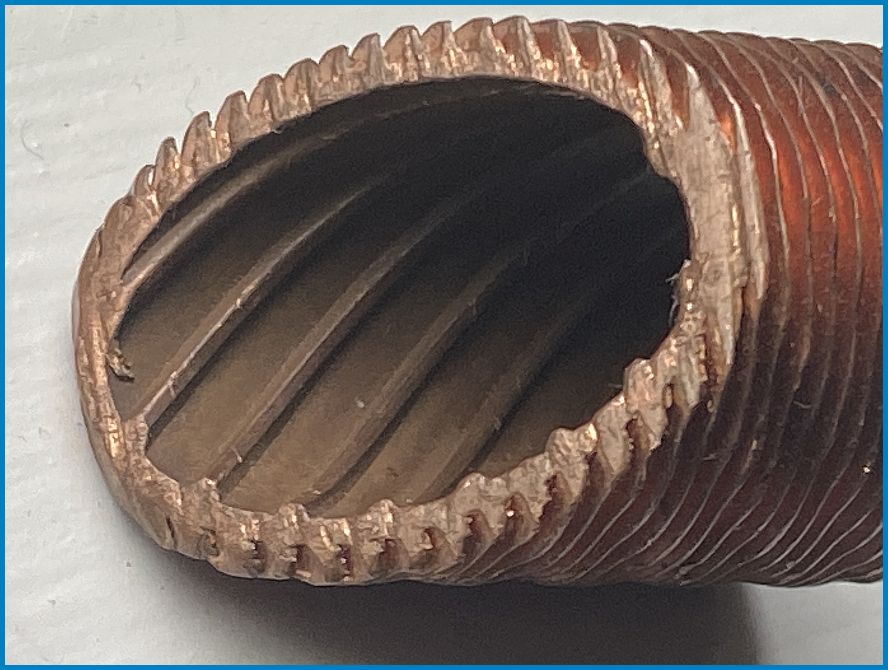
This macro-enabled Excel workbook shows the calculation of a heat transfer coefficient for forced convection in rough pipes. It uses the analogy between momentum and heat transfer. The algoritm uses the Colebrook equation for the frictional pressure drop in non-smooth pipes. Meanwhile it uses the Gnielinski correlation for the convection coefficient. Inputs are the Reynolds number and relative roughness (ε/D) of the pipe. The Colebrook equation is implicit in friction factor and thus we implement Excel’s solver routine. With the friction factor thus available, we use the Gnielinski correlation to find the corresponding Nusselt number (=hD/k).
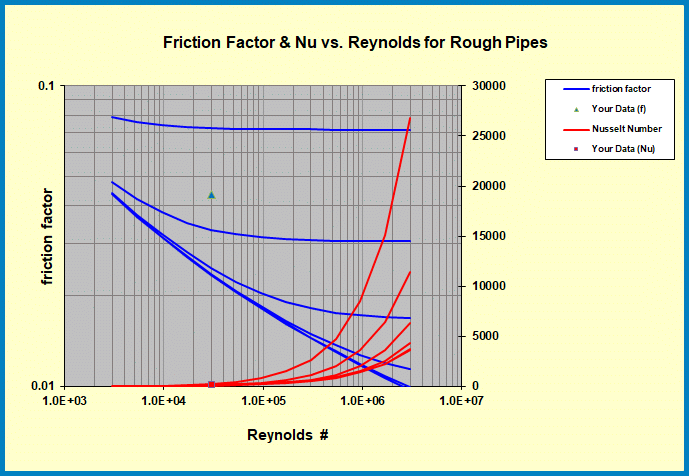
The HTT_pipe executable is limited to smooth pipes but allows thermally developing flows. The current spreadsheet assumes fully developed (both thermally and hydrodynamically) conditions.